
What I wish I knew about safety
Starting a new job is exciting – you’re finally earning money, learning new skills, and maybe even wearing your first hi-vis. But when you’re just starting out, you’re focused on fitting in, learning fast, and doing well – but safety often gets left behind. You assume that if something’s dangerous, someone will warn you. But the reality is, a lot of people just figure it out as they go – and that’s where things go wrong.
As someone who’s been there, here’s what I wish someone told me before I stepped onto the job site.
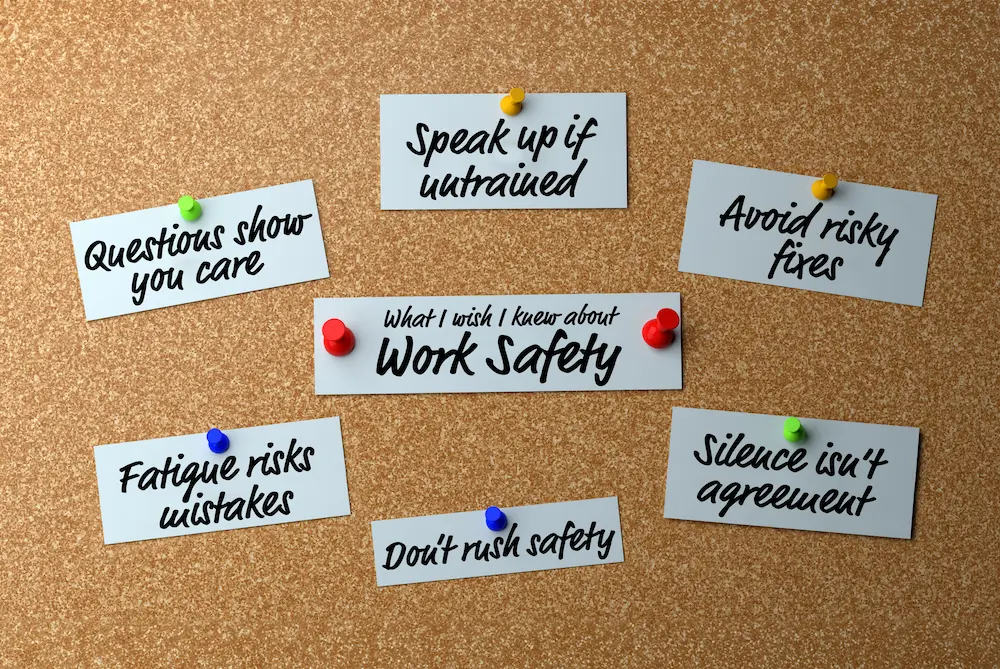
1. You’re not annoying for asking questions
Asking how to do something safely doesn’t make you look dumb – it makes you look like you care and want to do the job right.
2. You won’t always get the trained properly – ask anyway
Not every workplace will give you a full safety briefing. You’ll be thrown into a role without a proper rundown. If you don’t feel trained, say something – it’s your right.
3. Know when to step in
Your manager might appreciate problem solvers — but that doesn’t mean you should take risks. If a hazard is low risk and you know how to handle it safely, it’s okay to step in and help. For anything more serious, speak up and get support.
Follow SAMM to assess hazards and know when to act.
4. Fatigue hits harder than you think
Working long shifts, late nights, or back-to-back days can slow you down, make it harder to focus, and increase the chance of mistakes — even if you feel ‘fine’ and have had your coffees. Staying up late gaming or scrolling can add to the fatigue, even before your shift starts.
5. You’re allowed to take your time
Speed is praised a lot in some workplaces but rushing leads to mistakes. You won’t be respected more if you get hurt trying to go faster. The moment you get hurt, all that impressiveness of being fast goes out the window.
6. Silence doesn’t mean agreement
Just because nobody else is saying anything doesn’t mean they’re okay with what’s happening. You could be the one who speaks up and helps make the workplace safer for everyone.
The takeaway?
Don’t wait until something goes wrong to realise how important safety is. Ask questions. Speak up. Be the person who looks out for yourself and your team.
Being a problem solver doesn’t mean figuring everything out on your own. It means knowing when to pause, think critically, and make choices that protect your wellbeing – and others. That’s what smart, respected workers do.