
Let’s face it – safety doesn’t usually make the group chat.
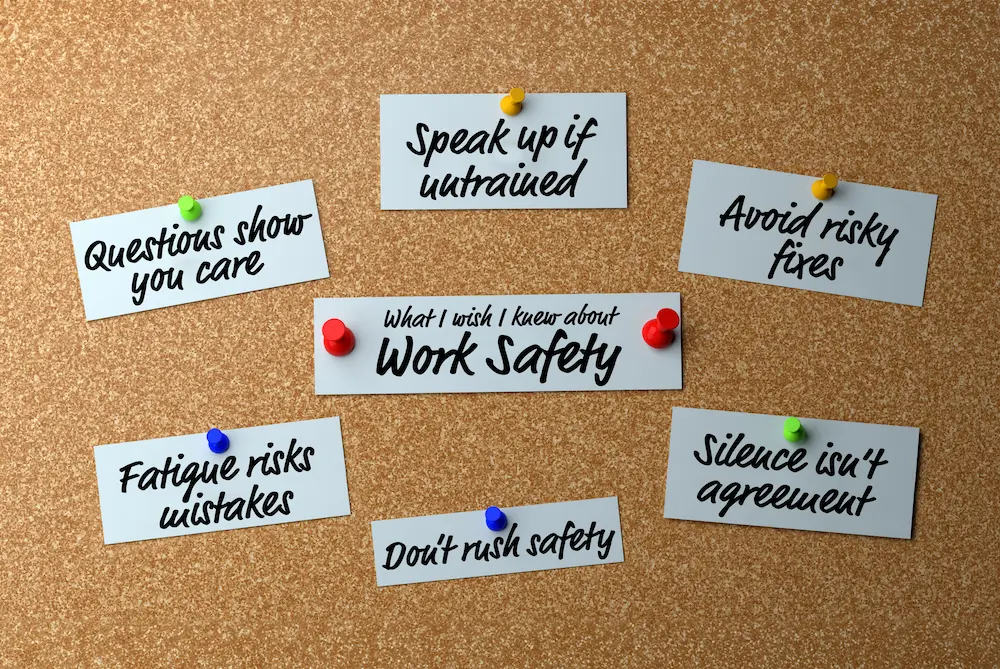
When you start a new job, you’re told where the breakroom is, where the toilets are, what time your shifts starts, and maybe (if you’re lucky) where the fire exit is. But when it comes to safety, most of us don’t speak up – even when things don’t feel right.
So why does no one talk about it?
The unspoken culture
For many young workers, especially in high-paced environments like retail, construction, or hospitality, there’s a silent pressure to just get on with it. You don’t want to seem slow, inexperienced, unreliable or like you’re making a big deal out of nothing.
The problem? That silence is exactly what leads to injury. Or worse.
The fear of looking soft
There’s this myth floating around worksites – that speaking up about safety makes you weak, or too sensitive. But the truth is, the most experienced, confident workers do speak up. Because they know what can happen when no one does.
If you feel unsafe lifting something, using a piece of machinery, or being left alone in a risky situation – that feeling matters.
What can we do about it
Here’s how we flip the script:
1. Make safety part of everyday conversation
It doesn’t have to be a boring checklist. Think of safety as looking out for your crew. “Hey, you good doing that solo?” can go a long way.
2. Train supervisors to listen
When young workers raise concerns, leaders should take it seriously – without judgment. That trust build culture.
3. Use your voice
You might be new, but you bring fresh eyes. You might spot things others don’t. Speaking up isn’t complaining – it’s protecting yourself and your team.
4. Normalise check-ins
Just like you’d ask a mate how they’re doing, check in about safety too. A quick chat is better than a trip to the hospital.
Let’s talk about it.
Safety should never feel taboo. Whether it’s a near-miss, a gut feeling or a full-blown incident – talking about it is how we learn, improve and protect each other.
It’s time to make safety part of the conversation – not the awkward afterthought.